Move your board from obligation to ownership
I recently spoke with a local philanthropist. She's a dedicated community volunteer who knows the local safety net ecosystem well, and she suddenly found herself with more free time on her calendar.
I asked if she would consider joining a nonprofit board.
"No, I don't want to fundraise," she said.
She has so much to give, and fundraising is what's keeping her away from board service.
If I asked most board members whether they'd rather spend five minutes in a pit filled with poisonous snakes, or ask a friend to donate, guess which one they'd pick?
Get the anti-venom ready.
There are other ways.
We keep starting from Year One
Board fundraising is one of the most stubborn problems in our sector.
We've tried toolkits, board retreats, committee charters, donor-list exercises, action plans, friendly reminders, and even friendlier reminders. These tools matter. But after all this work, why does it still feel like we're always starting from Year One?
Here's the problem: we treat a board of different people like a group of identical fundraisers. We ask everyone to email their friends, ask them to give, or bring ten people to the next event.
Some of our biggest board fundraising problems are really design problems. Training builds skill and confidence, and that matters, but layering a tool or training on top of a system that isn't working doesn't fix it. You cannot train your way out of a design problem.
Specialists, not generalists
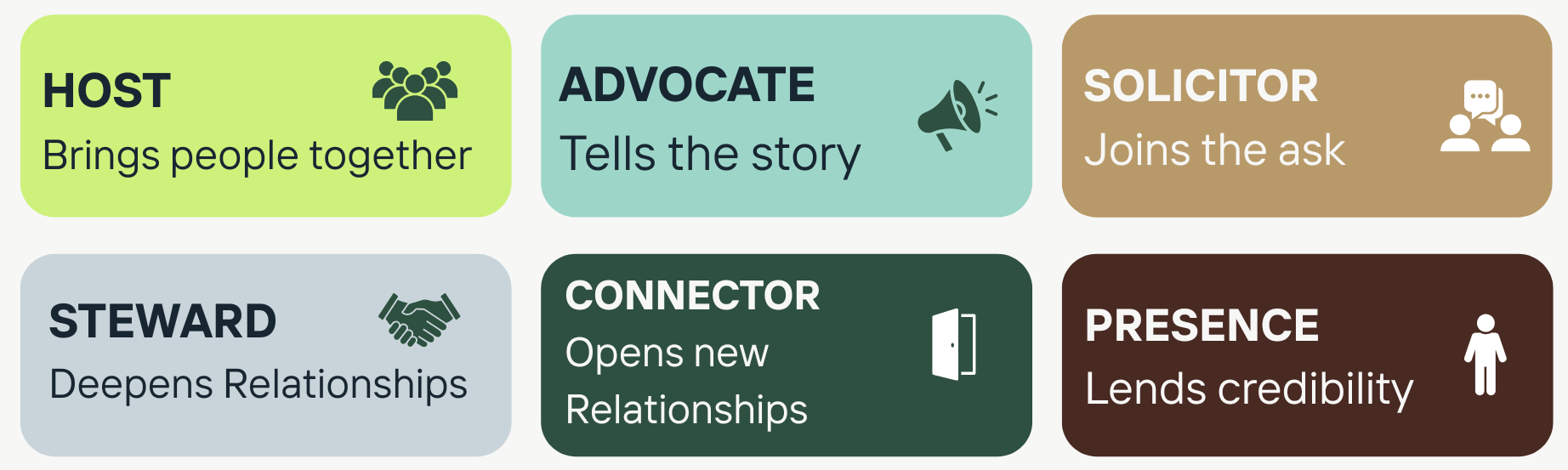
Board members do not need to "fundraise." They need one way to plug into the fundraising machine. A board needs to see itself as a fundraising team, and a team doesn't work because everyone does the same thing. It works because different players bring different strengths to one shared goal.
When I'm starting to work with a board, this is one of the first exercises I run with them. I ask each board member to pick the one archetype from the list below that fits who they are and how they realistically want to show up as a board member, not who they wish they were.
A board that couldn't get moving
I brought this exercise to a board that was stuck. There was fear about fundraising, confusion about roles, and one person carrying most of the load. The board cared. They wanted to help. But everyone was being asked to do the same thing.
So each board member selected the archetypes that fit who they really are. It sparked great conversations, but the next step mattered more: we mapped everyone's archetypes on a big piece of paper.
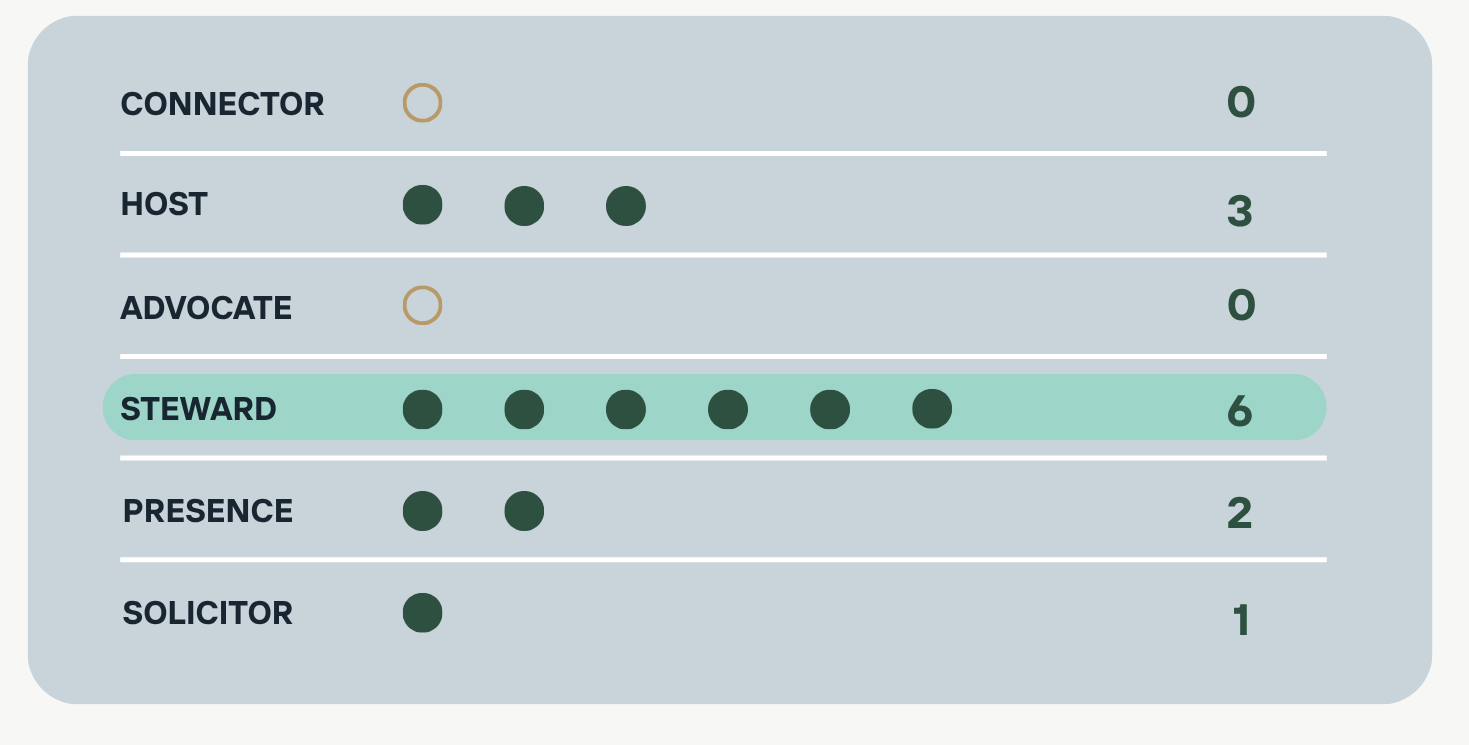
They were well equipped to deepen relationships with existing donors, but their strategy depended on opening doors to new relationships, and their pipeline had dried up.
They were really missing something, and putting it up on the board, that was a huge Aha moment for them.
Once they could see their team, they could act. They leaned into their Stewards strength to boost donor retention, hosted house parties where their closest donors could bring a friend, and focused board recruitment on Connectors and Advocates.
Your action this month
This month, I'm sharing two tools to help you build your board fundraising team.
Start with the Board Fundraising Archetypes: ask each board member to choose the role that fits their strengths and how they're willing to contribute now.
Then use the Whole-Board Fundraising Team Map to move from "What do I bring?" to "What kind of fundraising team are we?" Read the pattern:
Where do several people bring the same strength? Where are the gaps?
Where does the fundraising plan depend on strengths the board does not currently have?
What will we change based on this map?
Download both tools, free, from the From Obligation to Ownership toolkit.
The philanthropist I spoke with has time, money, relationships, knowledge, and a heart for her community. She has something meaningful to bring to a fundraising team.
She does not need to become a fundraiser. She needs to find something she enjoys doing and a board that understands what she brings. That will always beat a pit of snakes.